If you are thinking about moving to Ammon, you are probably asking a simple question: what does everyday life actually feel like there? That matters just as much as home prices or square footage, especially if you want a place that fits your routine, your commute, and the way you like to spend your time. In Ammon, daily life tends to center on neighborhood living, easy errands, nearby parks, and quick access to Idaho Falls when you want more options. Let’s dive in.
Ammon has a suburban, convenience-first feel
Ammon sits directly east of Idaho Falls, which gives you a blend of residential space and close access to jobs, shopping, dining, and entertainment in the larger Idaho Falls area. The city describes itself as one of Idaho’s fastest-growing communities, with room for residential growth and a hometown lifestyle.
That growth shows up in the numbers. Census QuickFacts places Ammon’s 2025 population estimate at 20,119, and the city’s 2023 estimate was 19,617. The same Census data also shows a 69.1% owner-occupancy rate, a median owner-occupied home value of $381,800, a median gross rent of $1,372, and a mean commute time of 21.9 minutes.
Taken together, those figures point to a mostly owner-occupied community where people often put down roots rather than cycle in and out quickly. If you want a city that feels residential and established, but still growing, Ammon fits that description well.
Ammon neighborhoods vary by area
One of the most helpful ways to understand Ammon is to think of it as a mix of newer subdivisions and older established areas. You are not looking at one uniform housing pattern across the whole city.
The city’s land-use plan separates neighborhoods into low-density residential, medium-density residential, and hillside residential areas. In practical terms, that means you will see detached single-family homes, attached townhome-style housing, and larger-lot homes in hillside areas east of 45th East.
Newer subdivisions shape much of Ammon
A lot of Ammon’s overall feel comes from its newer subdivisions. The city’s 2024 audit connects fiber buildouts to neighborhoods and developments such as Woodland Hills, Courtland Ridge, Highland Springs, Fox Hollow, Eagle Pointe, Bridgewater, Centennial Ranch, Jennie Jean Estates, Hawks Landing, Granite Creek, Trail Wood Village, Quail Ridge Estates, Hillview Village, and Hillsdale.
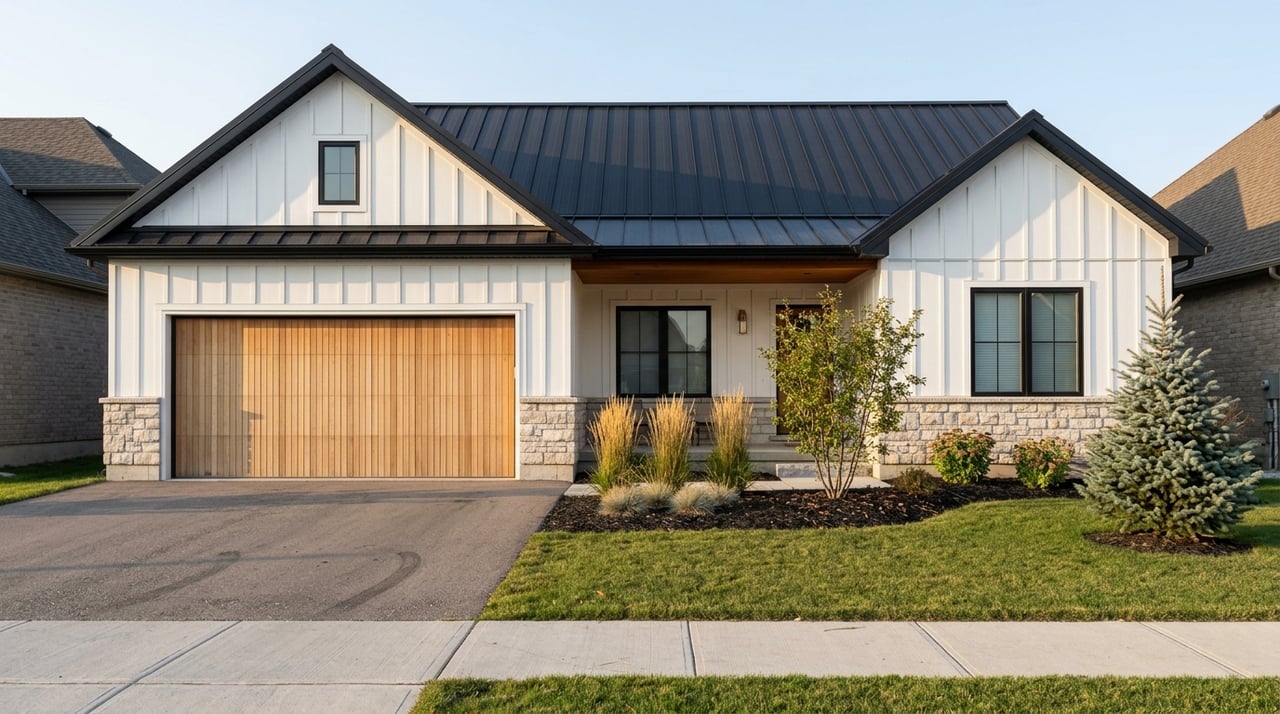
For buyers, that often means newer streetscapes, more recently built homes, and a neighborhood layout designed around modern suburban living. Depending on the area, you may find a mix of detached homes, townhomes, and subdivisions with community-oriented layouts.
Older areas add an established feel
Ammon also includes older neighborhoods that reflect the city’s earlier development pattern. The comprehensive plan specifically points to the Original Townsite and the Hillview and Hillsdale area as places where infrastructure such as water, sewer, streets, and sidewalks need modernization.
That does not make these areas less important. It simply means that some parts of Ammon may feel more established, with older blocks and a different street pattern than newer subdivisions.
What daily errands look like in Ammon
For day-to-day living, errands in Ammon are fairly straightforward. Much of the city’s convenience pattern centers around Sunnyside Road and other nearby commercial corridors.
Broulim’s Sandcreek, located at 2730 East Sunnyside Road, serves both Idaho Falls and Ammon and operates from early morning into late evening most days. That gives many residents a reliable local option for grocery runs and routine shopping.
The city’s planning approach also helps explain why Ammon feels easy to navigate for everyday needs. Its comprehensive plan says neighborhood and community commercial uses should be directed toward arterial intersections rather than scattered throughout residential blocks. As a result, Ammon often feels convenient without feeling crowded or urban.
Idaho Falls expands your options
One reason many people like Ammon is that you can keep your home base in a residential setting while still being very close to bigger regional amenities. For larger shopping trips, more restaurant choices, and event nights, many residents head into Idaho Falls.
Grand Teton Mall on East 17th Street in Idaho Falls serves as one of the area’s main shopping and dining destinations. Snake River Landing also plays a major role in the region’s entertainment and activity pattern, including access to Mountain America Center.
That means your routine can stay local when you want efficiency, but you are also close to more variety when you want a night out or a larger retail trip. For many buyers, that balance is a major plus.
Parks are a big part of local life
If you picture daily life in Ammon, parks should be part of that picture. The city places a strong emphasis on neighborhood recreation, outdoor amenities, and community events.
McCowin Park is the city’s largest park and includes a pool, splash pad, picnic shelter, playground, pickleball and tennis courts, walking path, and ball fields. That kind of setup gives residents a central place for both casual outings and more active recreation.
The city’s park information is not perfectly consistent on total count, with one page noting nine parks totaling more than 62 acres and the FAQ listing 12 named parks. Still, both sources point to the same larger story: Ammon has a meaningful park system woven into everyday neighborhood life.
Trails and neighborhood parks support routine use
The city says McCowin, Peterson, Eagle Pointe, Quail Ridge, and Target parks have asphalt trails. For many residents, that supports simple daily habits like a morning walk, an evening stroller loop, or a quick outing close to home.
In a suburban market, that kind of nearby recreation can make a real difference in how a neighborhood feels. It adds flexibility to your day without requiring a long drive to find green space.
Community events create local rhythm
Ammon also offers city-run programming and seasonal events that add structure to the year. The recreation calendar includes Summer Kickoff, Movies in the Park, Ammon Days, the Independence Day fireworks show, Pumpkin Walk, and winter lighting events.
These events help give the city a shared local rhythm. If you are looking for a place where community life is visible in public spaces, Ammon offers that in a practical, neighborhood-centered way.
Schools are woven into neighborhood life
For many households, one of the clearest signs of daily neighborhood activity is how schools fit into the city. Ammon is served by Bonneville Joint School District 93, which serves more than 13,000 students across Ammon, Iona, and Ucon.
District school lists show several Ammon-area schools, including Ammon Elementary, Hillview Elementary, Mountain Valley Elementary, Rimrock Elementary, Woodland Hills Elementary, Sandcreek Middle, and Hillcrest High. This helps reinforce the sense that schools are distributed throughout the community rather than concentrated in one isolated area.
The city’s comprehensive plan also notes a walkability study focused on Sunnyside Road crossings used by students traveling between Hillcrest High, Sandcreek Middle, Ammon Elementary, McCowin Park, and the city pool. That detail says a lot about daily life in Ammon: schools, parks, and neighborhood movement are closely connected.
Getting around is mostly car-oriented
Like many growing suburban cities, Ammon is largely shaped around driving. Major corridors that show up repeatedly in city and transportation planning include Sunnyside Road, Ammon Road, First Street, Crowley Road, and US-26 and Hitt Road.
That road network plays a big role in commute patterns, errands, and access to Idaho Falls. The mean commute time of 21.9 minutes suggests that many residents can move around the area without extremely long drives.
Transportation updates are focused on access and safety
The Idaho Transportation Department says the US-26 and Hitt Road intersection is being redesigned to improve safety and mobility. Planned work includes signal replacement, widening Hitt Road to up to five lanes, and adding sidewalks and lighting.
That reflects a broader theme in Ammon. Even though the city is mostly car-oriented, local planning still places real value on safer crossings, sidewalks, and better neighborhood connections.
Local connections still matter
Ammon’s comprehensive plan says neighborhood design should connect homes to schools, parks, shopping areas, and transit. The city also notes that TRPTA provides regional transit, while the streets department handles maintenance, sweeping, and snow removal.
In practical terms, you should expect a suburban driving lifestyle with added attention to local access. That can be especially helpful during winter, when consistent street maintenance becomes part of daily quality of life.
What kind of buyer may like Ammon
Ammon tends to appeal to buyers who want a residential setting with room to spread out, but who do not want to feel far removed from city conveniences. It can be a strong fit if you value newer subdivisions, neighborhood parks, and direct access to Idaho Falls amenities.
It may also appeal to you if you want choices in housing style. The city’s planning framework allows for detached homes, townhomes, and larger-lot hillside homes, which creates a broader mix than you might expect from a suburb at first glance.
For relocating buyers, Ammon often stands out because it offers a relatively easy-to-understand daily routine. You can live in a neighborhood-focused area, handle most essentials nearby, and still reach major retail and entertainment in Idaho Falls without much friction.
The bottom line on daily life in Ammon
Ammon offers a practical version of suburban living. You get a city with continued growth, mostly owner-occupied neighborhoods, a mix of newer and older residential areas, strong park access, and convenient proximity to Idaho Falls.
Daily life here is less about a dense downtown scene and more about ease, routine, and neighborhood connection. If that sounds like the lifestyle you want, Ammon is a market worth a closer look.
If you are considering a move in Ammon or anywhere in the greater Idaho Falls area, working with a local expert can make the process feel much more clear and much less overwhelming. When you are ready to talk through neighborhoods, timing, or your next move, connect with Abigail Martin.
FAQs
What are Ammon neighborhoods like for daily living?
- Ammon neighborhoods generally offer a suburban feel with a mix of newer subdivisions and older established areas, plus convenient access to parks, schools, and everyday shopping.
What types of homes are common in Ammon?
- Based on the city’s land-use plan, Ammon includes detached single-family homes, attached townhomes in medium-density areas, and larger-lot hillside homes east of 45th East.
Where do Ammon residents go for groceries and errands?
- Many daily errands are centered around Sunnyside Road and nearby commercial corridors, including Broulim’s Sandcreek on East Sunnyside Road.
Do people in Ammon drive to Idaho Falls often?
- Yes. Many residents use Idaho Falls for larger shopping trips, dining, entertainment, and events while keeping their home base in Ammon.
What parks and recreation options does Ammon have?
- Ammon has a neighborhood park system with trails, playgrounds, shelters, and community events, and McCowin Park includes a pool, splash pad, courts, ball fields, and walking paths.
Is Ammon easy to get around?
- Ammon is mostly car-oriented, with major travel routes including Sunnyside Road, Ammon Road, First Street, Crowley Road, and US-26, plus ongoing transportation improvements focused on safety and mobility.